Edge AI cameras · Updated October 2026
How to detect solar panel defects
The defects that show up in solar panels, where they come from, and which check finds each one: a visible-light camera, an infrared camera or an electrical measurement.
Quick answers
- What are the most common solar panel defects? They fall into three groups: visible damage such as cracks and scratches, defects you cannot see such as dirt or poor cell contact, and electrical faults such as open and short circuits. More
- How do you detect solar panel defects? Match the check to the group: a machine vision camera for surface damage, an infrared camera for heat, and voltage and power readings for wiring faults. More
- Where do microcracks come from? They start during cell manufacturing and module assembly, and careless stacking or transport makes them worse. More
- What does a short circuit do to a solar panel? It lets current bypass the cells, so the panel delivers less power than its rating or none at all. More
- What should you do with a defective panel? Have it repaired or replaced soon, because every defect in this list lowers the power you get from it. More
What are the most common solar panel defects?
Most panels are built to last for decades, but defects from the factory, the truck, the installer or the weather cut their output. They sort into three groups, and each group needs a different check.
Visual defects
Cracked glass, chipped edges, scratches and microcracks. They let less light reach the cells. How to spot them
Non-visible defects
Dirt and dust, and cell faults from the factory. They make the panel run hot or produce less. How to find them
Electrical defects
Open circuits, short circuits, reverse bias and lost maximum power point. Output drops or comes and goes. How to test for them
Cracks, chips and scratches you can see
Visual defects are physical damage to the panel. They reduce the light the cells capture, and so the power the panel generates.
The usual ones are cracked glass, chipped edges and scratches. Each of them reduces the light that reaches the cells.
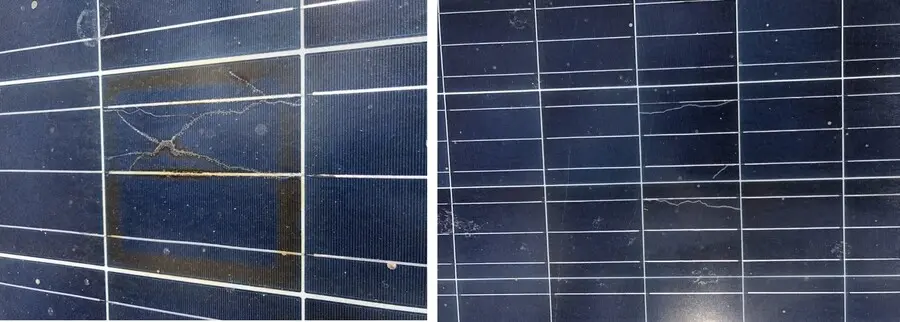
Microcracks
Microcracks form during solar cell manufacturing and module assembly. Handling decides whether they grow: panels picked up from a warehouse, stacked vertically or wrapped in blankets or foam, arrive with fewer cracks.
Some modules crack more easily than others. The least crack-prone choice is a monocrystalline module with half-cut cells and the most busbars.
Visual inspection can be automated with machine vision: a camera and a model check each panel for surface damage, on the production line or on site.
Solar panel defects you cannot see
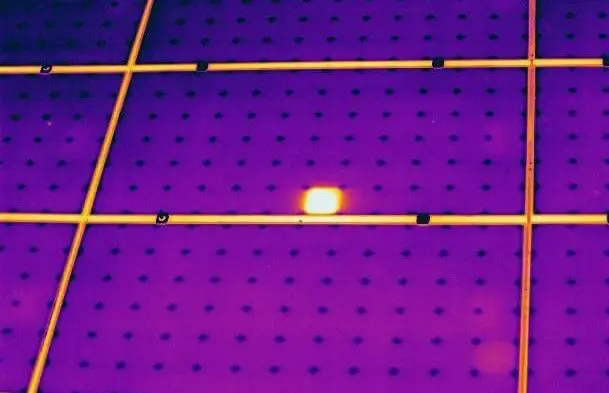
Some defects do not show in an ordinary photo. They change how the panel heats up or how much power it gives, so an infrared camera or a power reading finds them.
Dirt and dust on the surface. They can make the panel absorb more heat than it is designed for, or lower its output.
Faults inside the cells. Inadequate spacing between cells, ineffective light trapping by the cell material, low doping of the cell material, and poor electrical contact between the cell and the metal electrodes all reduce output without leaving a visible mark.
An infrared image, like the one here, shows the temperature across the panel instead of its colour, so the areas these defects affect stand out.
Electrical faults that cut a panel's output
Electrical defects usually come from improper installation or wiring. The panel then generates less power than it is rated for, or generates it on and off.
Maximum power point defects are usually manufacturing defects. The panel produces less than its rating even at its maximum power point.
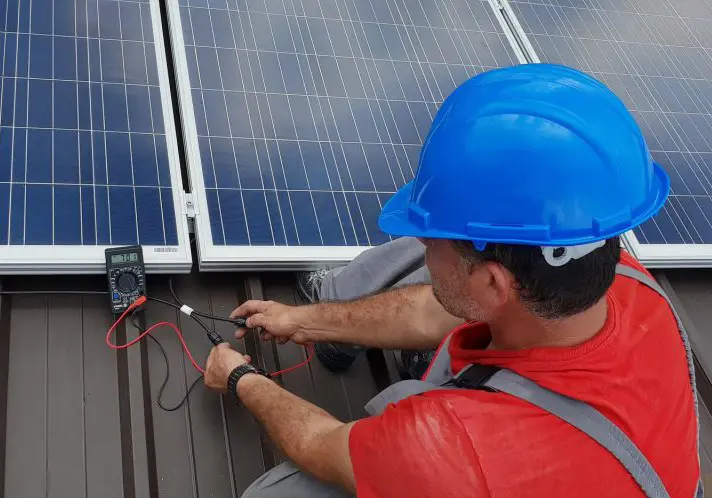
The three faults below can each start from a break in the panel's surface, a void inside the panel, or a damaged connection. They show up as a drop in voltage or power, which is why an electrical measurement against the panel's rating is the test for this group.
Open circuit
A break in the circuit stops current from flowing through the panel, so it delivers no power from that path.
Short circuit
Current finds a path that bypasses the cells. The panel delivers less power than its rating, or none.
Reverse bias
A voltage builds up the wrong way across part of the panel and holds current back, so the output drops.
How do you detect solar panel defects?
Start from where the defect comes from. That tells you which group it belongs to and which check will find it.
Defects enter at four points: the factory, shipping and handling, installation, and years on the roof. Factory defects tend to be microcracks and cell faults. Handling adds cracks. Installation adds wiring faults. The weather adds dirt, bird droppings and hail damage.
A full inspection uses all three checks. A visible-light camera with a machine vision model finds surface damage. An infrared camera finds the defects that change how the panel heats. Voltage and power readings find the electrical faults. The table below lists each defect with its check.
| Defect | Group | Usual cause | How to detect it |
|---|---|---|---|
| Cracked glass, chipped edges | Visual | Physical damage in handling, installation or hail | Visible-light camera, machine vision |
| Scratches | Visual | Physical damage | Visible-light camera, machine vision |
| Microcracks | Visual | Cell manufacturing, module assembly, rough handling | Camera inspection of the cells |
| Dirt, dust, bird droppings | Non-visible | Environment | Infrared camera, lower output |
| Low doping, cell spacing, light trapping | Non-visible | Manufacturing | Infrared camera, lower output |
| Poor contact to the electrodes | Non-visible | Manufacturing | Infrared camera, lower output |
| Maximum power point defect | Electrical | Manufacturing | Power reading against the rating |
| Open circuit, short circuit, reverse bias | Electrical | Improper installation or wiring, a break, a void or a damaged connection | Voltage and power readings |
What to do when you find a defective panel
Have it repaired or replaced as soon as you can.
Every defect in this article makes the panel generate less power than it can, and the shortfall comes back as a higher electricity bill. Manufacturing defects, damage in shipping or installation, and bird droppings or hail storms all cause them.
Most panels are built to withstand these problems. Knowing the failure modes lets you check new panels on arrival and inspect installed ones on a schedule.
Where this applies at Maxlab
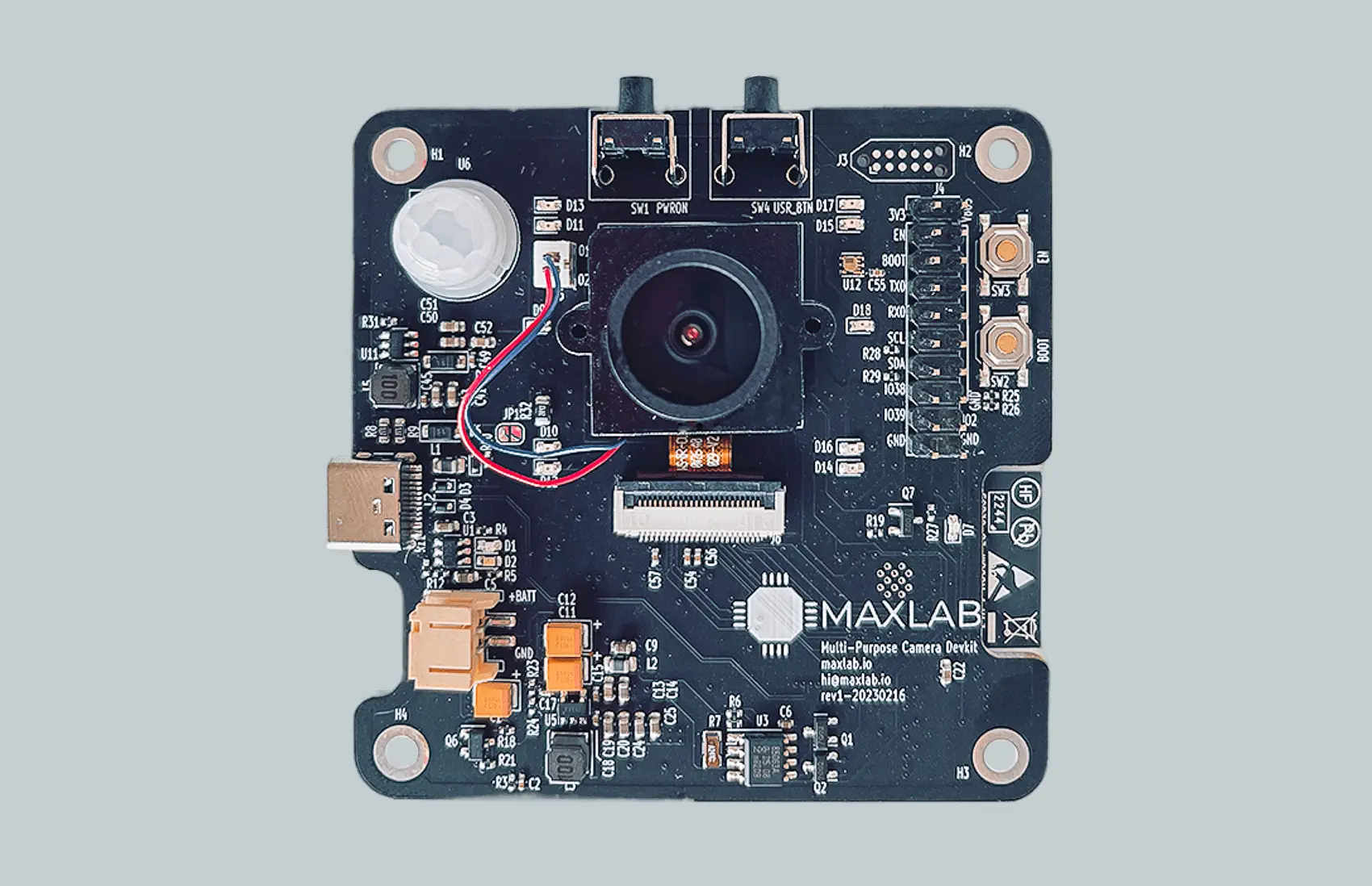
Panel inspection needs more than one kind of image, and Tokay Pro takes up to three camera sensors at once. The standard fit is the 8 MP Sony IMX219 for visible light, and a thermal or spectral module can sit beside it, so one device reads visible and thermal images and runs detection on its own i.MX 8M Plus. It is sold by quote, with the enclosure, lenses and power input specified per project.
For cameras that live on a solar panel themselves, Tokay Lite is our ESP32-S3 board that sleeps at microamps between events. The solar roof camera built on it shipped 9,500 units and runs about six months per charge. If you are building an inspection device, our hardware and firmware team designs the electronics and writes the firmware.
- Sensors on Tokay Pro
- Up to three: IMX219 8 MP, thermal, spectral
- Module rating
- −40 to +85 °C, industrial grade
- Solar camera shipped
- 9,500 units on the Tokay Lite platform
- Availability
- Tokay Pro by quote; Tokay Lite on Mouser

Building a camera for solar panel inspection?
Tell us which defects you need to find, how many panels, and where the camera will sit. We reply within 24 hours.
Or email [email protected] or book a 30-minute call.
Common questions
What is solar panel defect detection?
It is the check that finds damage and faults in a panel before they cost output. Visual defects are found with a camera in visible light, often with a machine vision model; defects you cannot see show up in an infrared image or as lower output; electrical faults show up in voltage and power readings.
Does a scratch on a solar panel reduce its output?
Yes. Scratches, cracked glass and chipped edges reduce the amount of light that reaches the cells, so the panel generates less power.
What causes microcracks in solar cells, and how do you avoid them?
Microcracks form during cell manufacturing and module assembly, and rough handling makes them worse. Panels stacked vertically, or wrapped in blankets or foam for transport, arrive with fewer cracks. The least crack-prone modules are monocrystalline, with half-cut cells and the most busbars.
What causes a short circuit in a solar panel?
Usually improper installation or wiring. A break in the panel's surface, a void inside the panel or a damaged connection can also give current a path that bypasses the cells.
How do you visually inspect solar panels?
Look for cracked glass, chipped edges, scratches and microcracks. At scale, a camera with a machine vision model does the same check on every panel, on the production line or on site.
Can dirt or dust cause solar panel defects?
Yes. Dirt and dust on the surface can make a panel absorb more heat than it is designed to, or lower its power output. An infrared image or a drop in output shows it even when the panel looks clean from a distance.
How do you identify manufacturing defects in PV modules?
Many do not show in a photo. Low doping, inadequate cell spacing, poor light trapping and poor contact between the cells and the electrodes show up in an infrared image or as lower output. Maximum power point defects, which also usually come from manufacturing, show up when you measure the panel's power against its rating.
What can go wrong with solar panels after installation?
Wiring faults from the installation (open circuits, short circuits and output that comes and goes), plus damage from the environment such as dirt, bird droppings and hail.
Can one camera check for both visible and thermal defects?
Yes, if it takes more than one sensor. Tokay Pro carries up to three: the 8 MP IMX219 for visible light, plus a thermal or spectral module, and runs detection on the device. It is sold by quote.