IoT and gateways · Updated October 2026
IoT in agriculture and how a smart farm works
What connected sensors and cameras measure on a farm, how the readings reach a dashboard, and how to start with one field before wiring up the rest.
Quick answers
- What is IoT in agriculture? Sensors and cameras in fields, barns and machines send their readings over a wireless link to a dashboard, so the farmer sees conditions and gets alerts without driving out to check. How it works
- What does a smart farm monitor? Soil moisture and nutrients, the weather, crop growth, animals and equipment, and it uses those readings to decide when to water or feed. What it measures
- How do you set up a smart farm? Pick one problem in one field, choose sensors and a radio that reaches it, connect a gateway and a dashboard, then set the alerts you will act on. Setup steps
- What makes farm IoT hard? Securing the devices and data, finding people to run the system, powering devices far from an outlet and getting a signal across the land. Challenges
What is IoT in agriculture?
Devices on the farm measure something, a gateway or a cellular link carries the reading, and a platform turns it into a chart or an alert. The farmer decides what to do.
Remote monitoring is the point. A farmer can follow crop health and growth from anywhere instead of walking every field, and the same readings build a record of how each crop performed over the season. Alerts cover the moments that matter between visits: a change in the weather, a dry zone, a machine that stopped, or something moving in a pen at night.
What does a smart farm monitor?
A smart farm uses sensors and data analysis to decide how much water or nutrients to apply and when. Four groups of devices cover most of what a farm needs to watch.
Soil and water
Probes in the ground report soil moisture and nutrient levels. Irrigation then runs on what the field needs at that time instead of a fixed schedule.
Weather
A station on site logs temperature, rain and wind. The platform raises an alert when conditions change, so frost or a storm does not arrive unnoticed.
Crops and livestock
A camera over a crop row or a pen can run a model trained to spot pests, disease or an animal in trouble. It sends only the finding, so the farmer reads a message instead of hours of footage.
Equipment
Pumps, gates and machines report whether they are running and when they stopped. Someone who works nights or off hours gets the alert on a phone instead of finding the problem in the morning.
How do you set up a smart farm with connected sensors?
Start small. One field and one question show whether the data changes a decision before the system grows to the whole farm.
1. Pick one problem
Choose a decision you make today by guesswork or a site visit, such as when to water one field or whether a pen needs a check at night.
2. Choose sensors and a radio
Match the sensor to the question and the radio to the distance. The table below lists the usual options.
3. Connect a dashboard and alerts
A gateway or a cellular link sends readings to a platform. Set the thresholds you will act on, and look at the history after a few weeks.
Which radio reaches the field
| Radio | Network | Typical battery life | Fits on a farm for |
|---|---|---|---|
| Wi-Fi | Existing access point | Months on AA cells with infrequent uploads | Cameras and devices near the house, barn or a building with power |
| Zigbee | Mesh, needs a hub | One to two years on a coin cell | Sensors inside barns and greenhouses |
| Bluetooth LE | Point to point, phone | Years on a coin cell at low duty cycle | Tags and sensors read by a phone or a nearby gateway |
| LoRa | Star, needs a gateway | Years, sending a few bytes | Soil and weather sensors spread across fields |
| LTE-M / NB-IoT | Mobile operator, no gateway | Months to years with power-saving modes | Remote sites and moving assets with cell coverage |
Figures from the radio table in our low-power wireless MCU comparison, which also lists the chips behind each one.
What makes IoT on a farm hard?
The sensors are the easy part. Most projects slow down on one of these four.
Security
A connected device that is not secured can leak data or be taken over. Each device needs its own credentials, an encrypted link and a way to get firmware fixes after it is installed.
Skills
Agritech companies have trouble finding people who can install and run these systems, and training staff in-house takes time. A system that is set up through a web page and runs without daily attention needs fewer of them.
Power in the field
Fields have no outlets. Devices run on batteries or a small solar panel, so they sleep between readings and wake only to measure and send. Our guide to estimating battery life shows how to size the battery.
Coverage
Wi-Fi rarely reaches the far end of a field. Long-range radios with their own gateway, or cellular where there is a signal, carry readings from where the house network stops.
Where this applies at Maxlab
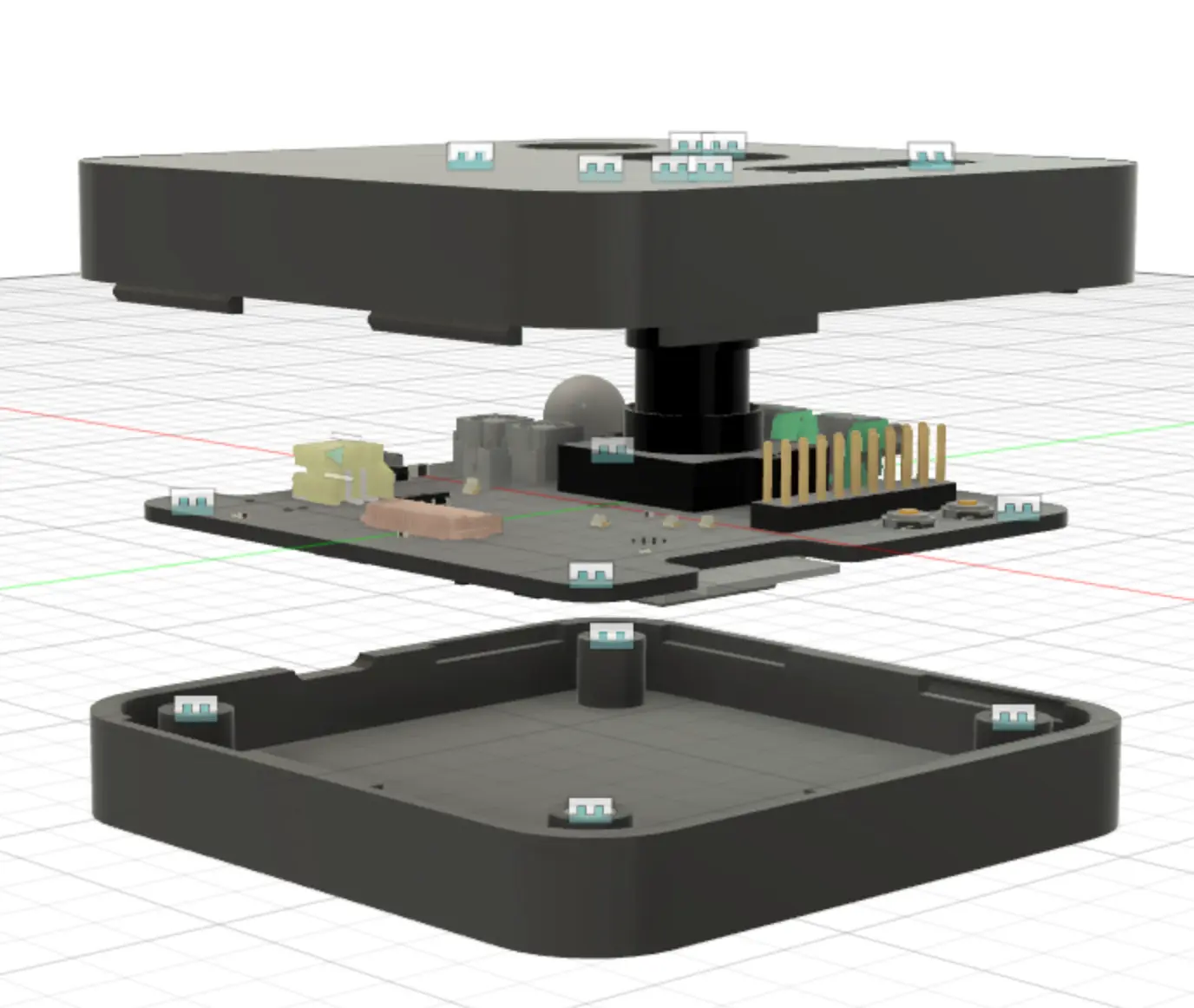
Tokay Lite is our ESP32-S3 camera for places without power. A PIR motion sensor or a timer wakes it, it runs detection on the board and sends the result over Wi-Fi by HTTP or MQTT, and IR LEDs light the scene to about 10 m at night. The same platform went into a solar camera for rooftops: 9,500 units shipped, running about six months per charge (case study). If you are weighing a hobby board, see ESP32-CAM vs Tokay Lite.
Readings from cameras, a Wi-Fi, Zigbee and Bluetooth LE gateway or any device that speaks MQTT or HTTP can go to Rainforest IoT, our hosted platform for dashboards, alerts and firmware updates over the air. For a farm device of your own, our hardware and firmware services cover the sensor choice, the enclosure, the power design and the firmware.
- Field camera
- Tokay Lite, ESP32-S3, PIR wake, IR to about 10 m
- Operating temperature
- −40 to +50 °C
- Solar camera shipped
- 9,500 units, about six months per charge
- Platform
- Rainforest IoT: dashboards, alerts, OTA
Building a device for the farm
Tell us what you need to measure, how far the device sits from power and network, and how many you plan to build. We reply within 24 hours.
Or email [email protected] or book a 30-minute call.
Common questions
What is a smart farm?
A farm where sensors, cameras and connected machines report what is happening in the fields, barns and equipment, and where those readings drive decisions such as when to water, feed or send someone out. The data shows up on a dashboard and as alerts on a phone.
What sensors are used in smart farming?
The common ones are soil moisture and nutrient probes, weather stations (temperature, rain, wind), cameras over crops or pens, and status sensors on pumps, gates and machines. Start with the one that answers the question you have today.
Which wireless network works best on a farm?
It depends on distance. Wi-Fi suits devices near a building with an access point. Zigbee and Bluetooth LE cover barns and greenhouses. LoRa with its own gateway carries small readings across fields for years on a battery, and LTE-M or NB-IoT works anywhere with cell coverage and needs no gateway. Our MCU comparison has the full table.
Can a camera detect pests or sick animals?
Yes, if it runs a model trained on pictures of that pest, disease or behavior. An edge AI camera runs the model itself and sends only the finding, which keeps the data small enough for a weak rural link. See edge AI features and applications for how that works on Tokay Lite.
How are farm sensors powered without an outlet?
With batteries, often topped up by a small solar panel. The device sleeps between readings and wakes only to measure and send. The solar camera we built on the Tokay Lite platform runs about six months per charge; the battery life guide shows how to estimate it for your own duty cycle.
Is farm IoT data secure?
Only if the system is built for it. Each device should have its own credentials, send data over an encrypted link such as MQTT or HTTP over TLS, and accept firmware fixes over the air after installation. Rainforest IoT handles device credentials and over-the-air updates for the devices registered on it.
Can I check my farm data from my phone?
Yes. A hosted platform shows the readings on a dashboard in the browser and sends email or webhook alerts when a value crosses a threshold. Rainforest IoT does this for our cameras and gateways, and for any device that sends MQTT or HTTP.
How do I start an agriculture IoT project with Maxlab?
Send us what you need to measure, where the device sits, what power and signal it has there, and how many you plan to build. We design the hardware and firmware, from a first prototype to production, and can connect it to Rainforest IoT.