Work · Home energy

12-circuit home energy monitor: 2,300 units shipped

Our client wanted a device that shows a household which circuit is using power right now. We designed the electronics and firmware, and about 2,300 units have shipped.
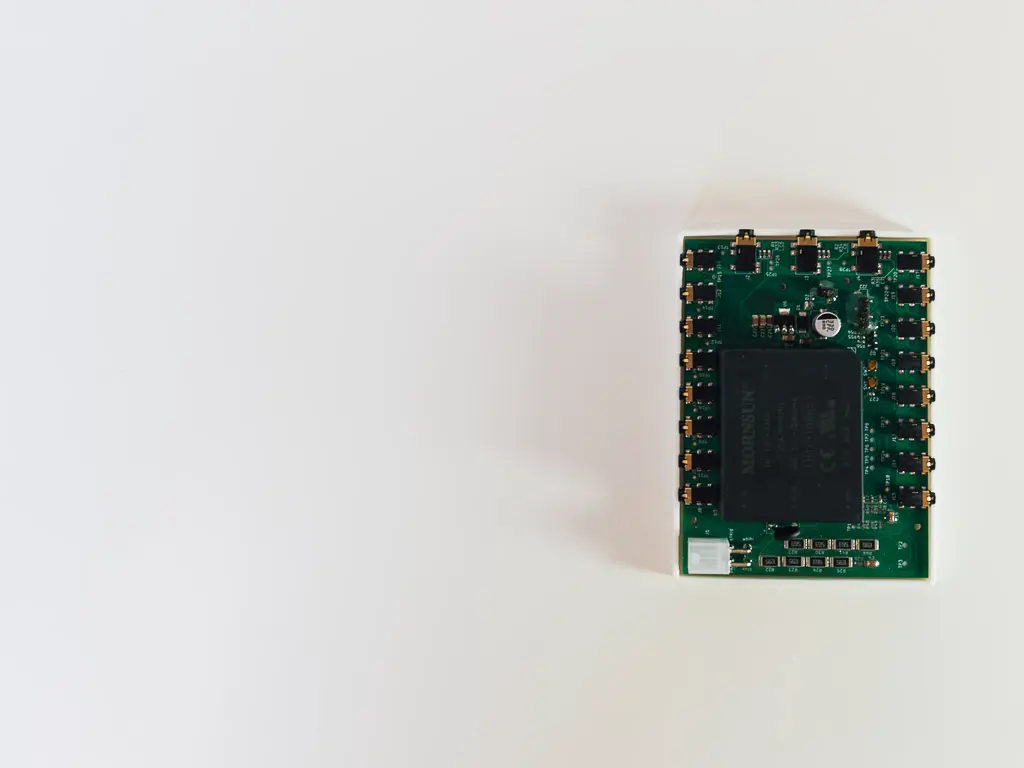
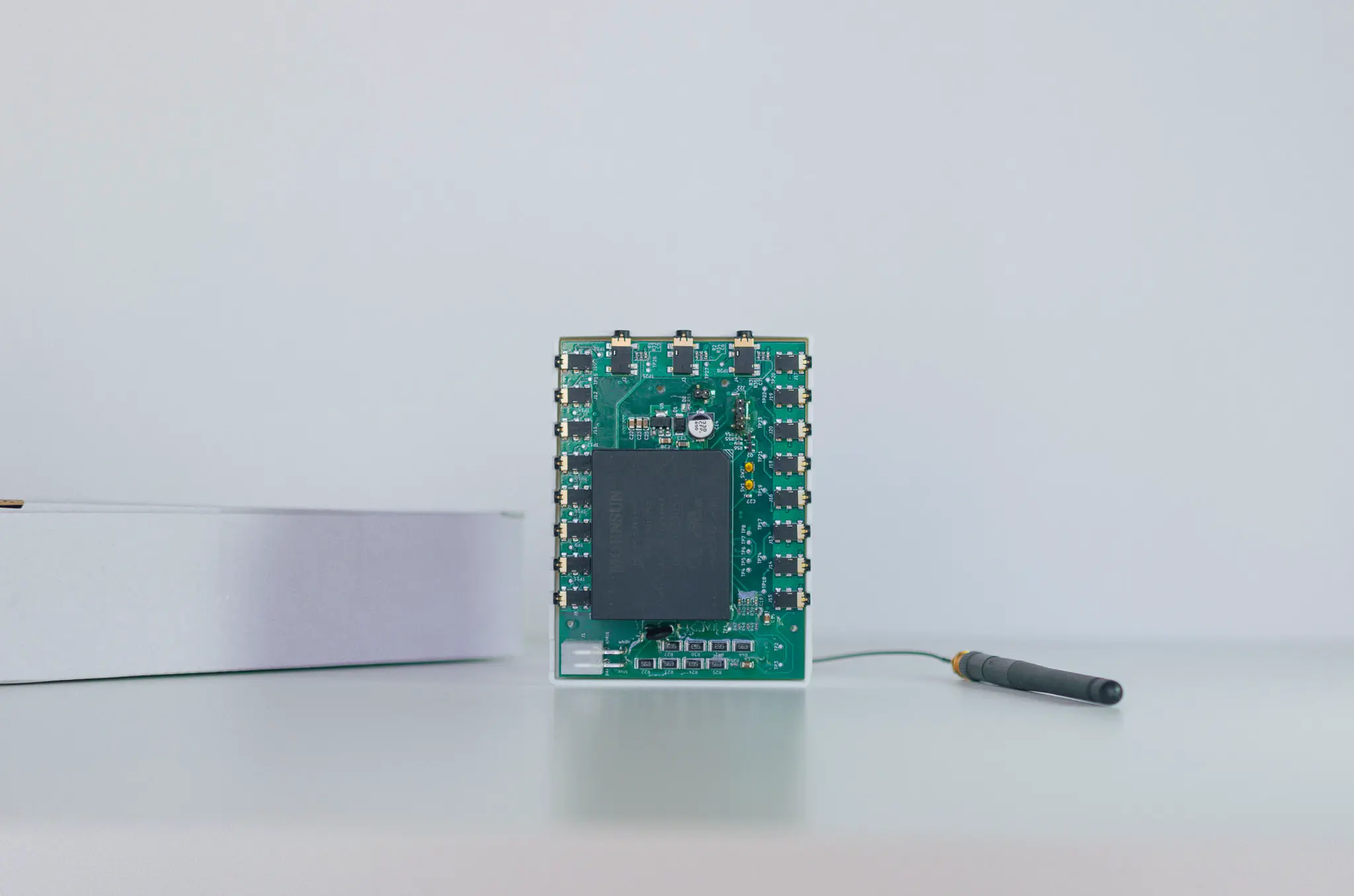
The home energy monitor board with a connector for each of the 12 current sensors along its edges
The monitor board: one connector per circuit along the edges, readings sent over Wi-Fi.

Result

2,300units shipped under the client's brand
Timeline
~12 monthsfrom the first concept sketch to the first manufacturing batch
Channels
12 circuitsmeasured at the same time, each on its own current sensor
Radios
2Wi-Fi for the data, Bluetooth for setup from a phone

The brief

A household meter gives one number for the whole house. The client wanted a per-circuit picture that a homeowner or a small business can read on a phone.

Problem

Homeowners and small businesses want to know which circuit uses the power and when. A single utility meter cannot tell a heat pump from a dryer, and a monthly bill arrives too late to change anything.

Where tariffs change through the day, the same data lets the user shift a load to a cheaper hour.

  • Per-circuit readings
  • Live
  • Tariff changes

Constraints

Twelve current channels had to fit one board that lives next to the breaker panel. Readings go to a phone app over Wi-Fi, and a phone has to be able to set the device up over Bluetooth before it is on the network.

The result had to be a product the client could sell, so the board and firmware were designed for a manufacturing batch from the start.

  • 12 channels
  • Breaker-panel area
  • Wi-Fi and Bluetooth
  • Built to ship

What we built

The 12-channel monitor: electronics, firmware, and the Wi-Fi and Bluetooth link to the app and the cloud. Each circuit has its own live reading and its own threshold; when a circuit crosses it, the user gets an alert on the phone or by email.

The cloud keeps the history and builds daily, weekly and monthly reports for one circuit or the whole house, which the user can export.

  • Electronics
  • Firmware
  • Alerts
  • Reports and export

How the data gets to the user

A current sensor on each of the 12 circuits feeds the monitor. The monitor measures all 12 live and sends the readings over Wi-Fi to the user's app and to the cloud. The cloud stores the history, builds the reports and watches each circuit's threshold; when a circuit crosses its limit, the alert goes to the phone or to email. Bluetooth is used once, to put the device on the Wi-Fi network from a phone.

From the breaker panel to the phone: 12 circuits, one board, Wi-Fi out, Bluetooth onceA system map of the installation. A breaker panel with 12 breakers, CH 1 to CH 12, in two columns of six. A clip-on current sensor sits on each circuit, one per circuit, and its lead runs to one of 12 connectors on the edges of the monitor board, which sits next to the breaker panel in a utility room and measures all 12 circuits live. An external Wi-Fi antenna on the board sends the readings over Wi-Fi to the app, which shows a live reading per circuit, and to the cloud, which keeps the history, builds daily, weekly and monthly reports and lets the user export them. When a circuit crosses its threshold the cloud sends an alert to the phone or to email. Bluetooth is used once, for first setup from a phone. Title block: 12 channels, Wi-Fi and Bluetooth radios, about 12 months to the first batch, 2,300 units shipped.UTILITY ROOMBREAKER PANELCH 1CH 7CH 2CH 8CH 3CH 9CH 4CH 10CH 5CH 11CH 6CH 12CLIP-ON CURRENT SENSOR,ONE PER CIRCUITONE CONNECTOR PER CIRCUITMONITOR · MEASURES ALL 12 LIVENEXT TO THE BREAKER PANELWI-FIEXTERNALWI-FI ANTENNAAPPlive reading per circuitCLOUDhistorydaily / weekly / monthlyreports, exportcircuit crossesits thresholdALERTphone or emailBLUETOOTH · ONCE, FIRST SETUPCHANNELS12RADIOSWI-FI + BLUETOOTHFIRST BATCH~12 MONTHSSHIPPED2,300 From the breaker panel to the phone: 12 circuits, one board, Wi-Fi out, Bluetooth onceA system map of the installation. A breaker panel with 12 breakers, CH 1 to CH 12, in two columns of six. A clip-on current sensor sits on each circuit, one per circuit, and its lead runs to one of 12 connectors on the edges of the monitor board, which sits next to the breaker panel in a utility room and measures all 12 circuits live. An external Wi-Fi antenna on the board sends the readings over Wi-Fi to the app, which shows a live reading per circuit, and to the cloud, which keeps the history, builds daily, weekly and monthly reports and lets the user export them. When a circuit crosses its threshold the cloud sends an alert to the phone or to email. Bluetooth is used once, for first setup from a phone. Title block: 12 channels, Wi-Fi and Bluetooth radios, about 12 months to the first batch, 2,300 units shipped.BREAKER PANELCH 1CH 7CH 2CH 8CH 3CH 9CH 4CH 10CH 5CH 11CH 6CH 12MONITORMEASURESALL 12 LIVE123EXTERNALWI-FI ANTENNAWI-FIBLUETOOTHONCE,FIRST SETUPAPPlive reading per circuitCLOUDhistorydaily / weekly / monthlyreports, exportcircuit crosses its thresholdALERTphone or email1CLIP-ON CURRENT SENSOR, ONE PER CIRCUIT2ONE CONNECTOR PER CIRCUIT3UTILITY ROOM, NEXT TO THE BREAKER PANELCHANNELS12RADIOSWI-FI + BLUETOOTHFIRST BATCH~12 MONTHSSHIPPED2,300 From the breaker panel to the phone: 12 circuits, one board, Wi-Fi out, Bluetooth onceA system map of the installation. A breaker panel with 12 breakers, CH 1 to CH 12, in two columns of six. A clip-on current sensor sits on each circuit, one per circuit, and its lead runs to one of 12 connectors on the edges of the monitor board, which sits next to the breaker panel in a utility room and measures all 12 circuits live. An external Wi-Fi antenna on the board sends the readings over Wi-Fi to the app, which shows a live reading per circuit, and to the cloud, which keeps the history, builds daily, weekly and monthly reports and lets the user export them. When a circuit crosses its threshold the cloud sends an alert to the phone or to email. Bluetooth is used once, for first setup from a phone. Title block: 12 channels, Wi-Fi and Bluetooth radios, about 12 months to the first batch, 2,300 units shipped.BREAKER PANELCH 1CH 7CH 2CH 8CH 3CH 9CH 4CH 10CH 5CH 11CH 6CH 12MONITORMEASURESALL 12 LIVE123EXTERNALWI-FI ANTENNAWI-FIBLUETOOTHONCE,FIRST SETUPAPPlive reading per circuitCLOUDhistorydaily / weekly / monthlyreports, exportcircuit crosses its thresholdALERTphone or email1CLIP-ON CURRENT SENSOR, ONE PER CIRCUIT2ONE CONNECTOR PER CIRCUIT3UTILITY ROOM, NEXT TO THE BREAKER PANELCHANNELS12RADIOSWI-FI + BLUETOOTHFIRST BATCH~12 MONTHSSHIPPED2,300
From the breaker panel to the phone. Twelve clip-on sensors wired to one board next to the panel; Wi-Fi carries every circuit to the app and the cloud, Bluetooth is used once, for setup.

What the user sees

The app shows each circuit on its own line, in watts, as it is now. Big loads such as a heat pump, a range or an EV charger stand out from lighting and outlets, so the user can see where the power is going before the bill arrives.

The drawing below splits one example moment into its 12 circuits by area. The values are illustrative; we do not publish customer data.

One meter, one number: an example household total of 15,800 W split into its 12 circuitsIllustrative readings, not customer data. Cell area is proportional to watts; the outer rectangle is the example total of 15,800 W. Heat pump 2400 W; Range 1800 W; Dryer 1500 W; Water heater 1200 W; EV charger 7200 W; Kitchen 650 W; Living room 320 W; Bedrooms 180 W; Lighting 140 W; Garage 90 W; Office 260 W; Outdoor 60 W. Hatched cells are over 1 kW at this moment: EV charger, heat pump, range, dryer and water heater.A PER-CIRCUIT PICTURE: ONE CELL PER CIRCUIT, AREA = WATTSWHOLE HOUSE · EXAMPLE TOTAL 15,800 WEV CHARGER7200 WHEAT PUMP2400 WRANGE1800 WDRYER1500 WWATER HEATER1200 WKITCHEN650 WLIVING ROOM 320 WOFFICE 260 WBEDROOMS 180 WLIGHTING 140 WGARAGE 90 WOUTDOOR 60 WHATCHED: OVER 1 KW AT THIS MOMENTEXAMPLE VALUES · NOT CUSTOMER DATA One meter, one number: an example household total of 15,800 W split into its 12 circuitsIllustrative readings, not customer data. Cell area is proportional to watts; the outer rectangle is the example total of 15,800 W. Heat pump 2400 W; Range 1800 W; Dryer 1500 W; Water heater 1200 W; EV charger 7200 W; Kitchen 650 W; Living room 320 W; Bedrooms 180 W; Lighting 140 W; Garage 90 W; Office 260 W; Outdoor 60 W. Hatched cells are over 1 kW at this moment: EV charger, heat pump, range, dryer and water heater.A PER-CIRCUIT PICTURE: ONE CELL PER CIRCUIT, AREA = WATTSWHOLE HOUSE · EXAMPLE TOTAL 15,800 WEV CHARGER7200 WHEAT PUMP2400 WRANGE1800 WDRYER1500 WWATER HEATER1200 WKITCHEN650 WLIVING ROOM 320 WOFFICE 260 WBEDROOMS 180 WLIGHTING 140 WGARAGE 90 WOUTDOOR 60 WHATCHED: OVER 1 KW AT THIS MOMENTEXAMPLE VALUES · NOT CUSTOMER DATA One meter, one number: an example household total of 15,800 W split into its 12 circuitsIllustrative readings, not customer data. Cell area is proportional to watts; the outer rectangle is the example total of 15,800 W. Heat pump 2400 W; Range 1800 W; Dryer 1500 W; Water heater 1200 W; EV charger 7200 W; Kitchen 650 W; Living room 320 W; Bedrooms 180 W; Lighting 140 W; Garage 90 W; Office 260 W; Outdoor 60 W. Hatched cells are over 1 kW at this moment: EV charger, heat pump, range, dryer and water heater.PER CIRCUIT: AREA = WATTSEXAMPLE TOTAL 15,800 WEV CHARGER7200 WHEAT PUMP2400 WRANGE1800 WDRYER1500 WWATER HEATER1200 W12345671KITCHEN650 W2LIVING ROOM320 W3OFFICE260 W4BEDROOMS180 W5LIGHTING140 W6GARAGE90 W7OUTDOOR60 WHATCHED: OVER 1 KW AT THIS MOMENTEXAMPLE VALUES · NOT CUSTOMER DATA
Example values, not customer data. One household total split into its 12 circuits: each cell's area is proportional to its watts at one moment.

The device

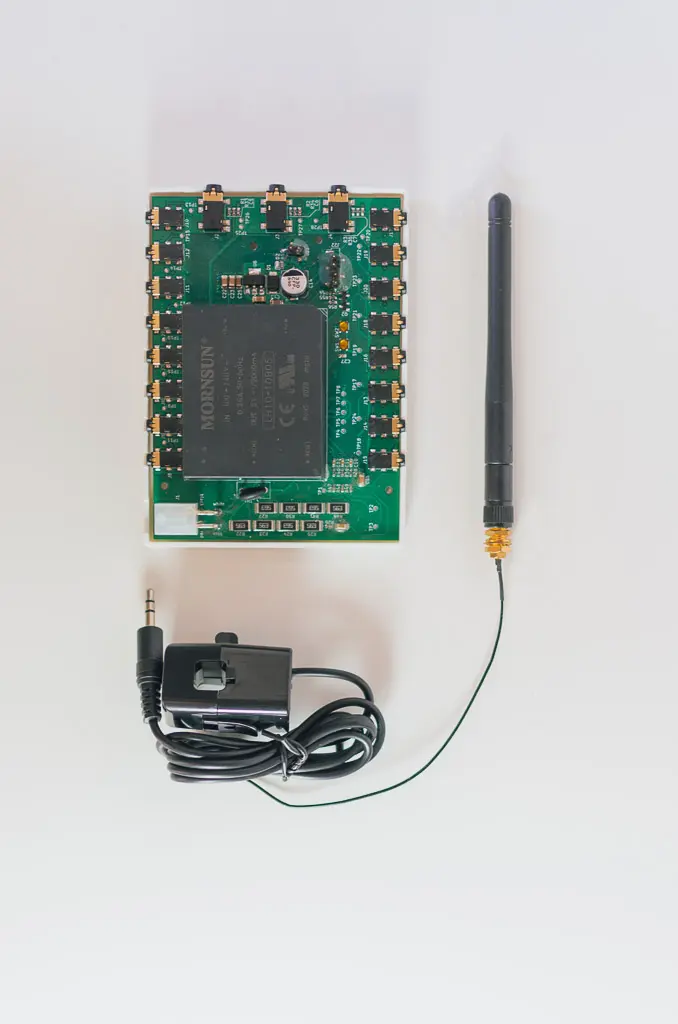
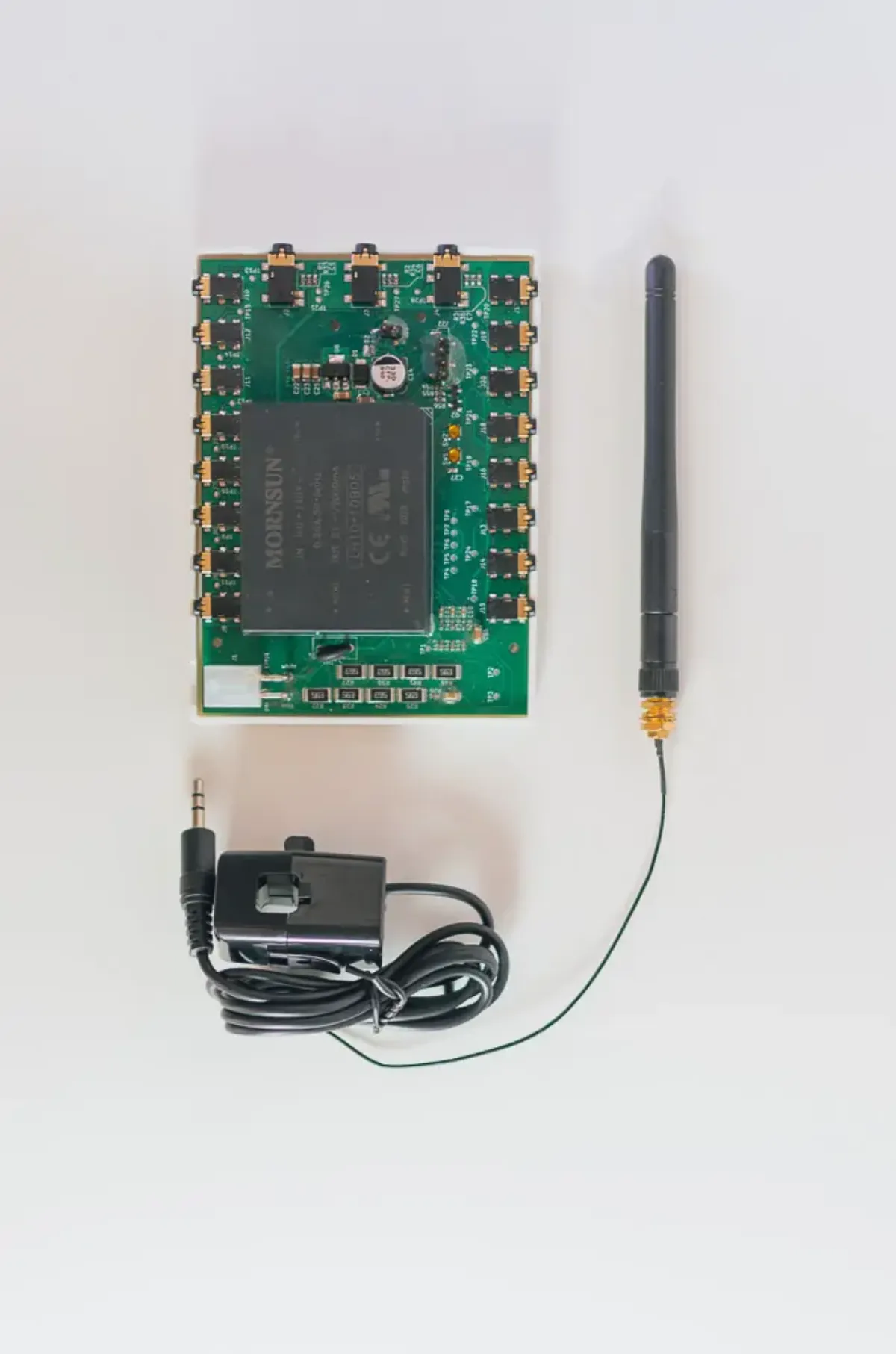
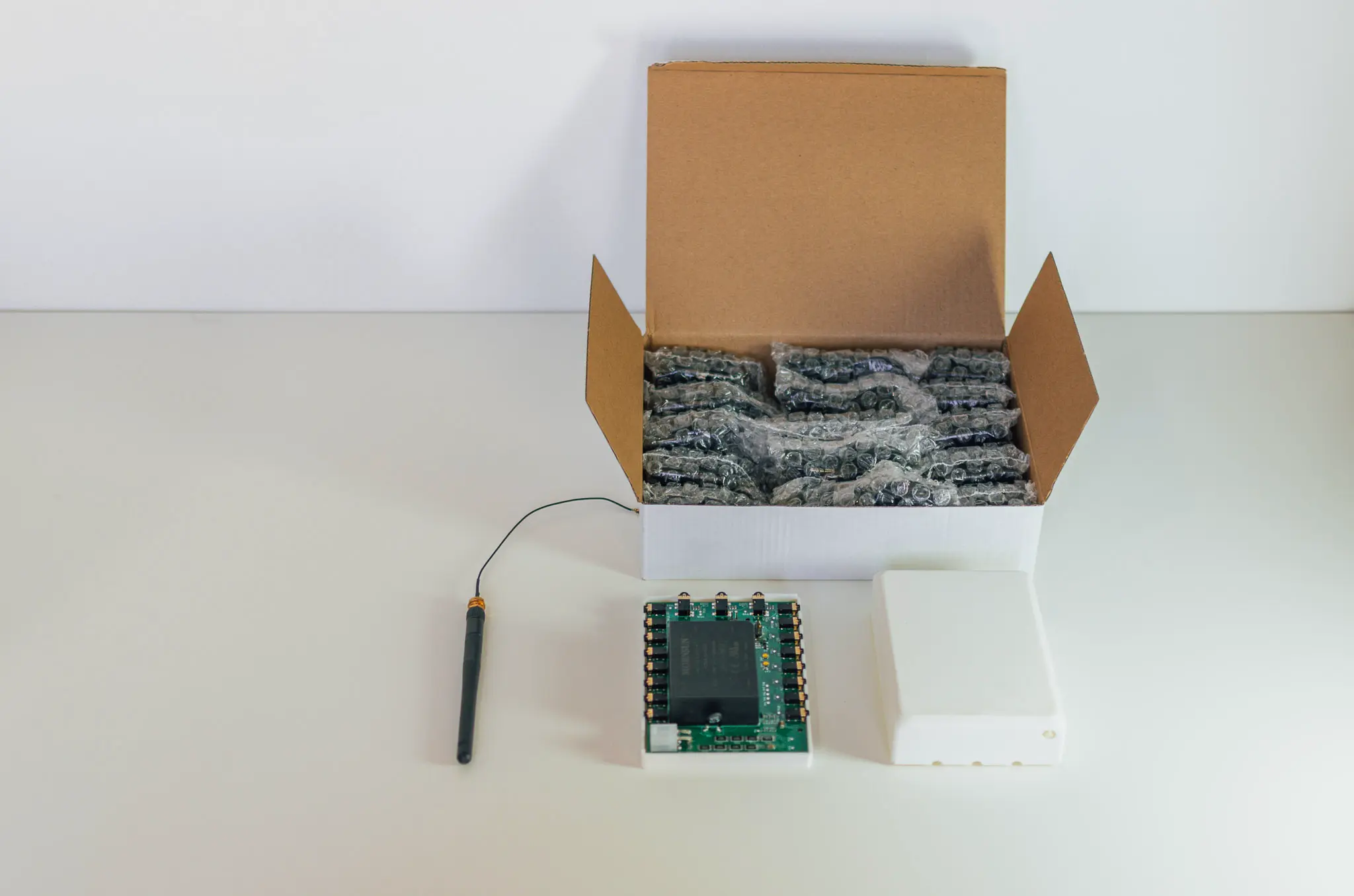
The board, its antenna and the current-sensor leads, as shipped to the client.
What the project used

This was an electronics and firmware project with manufacturing support: the schematic and layout for a 12-channel measurement board, the firmware that samples every circuit and runs the Wi-Fi and Bluetooth radios, and the data link to the client's app and cloud. The board went through several revisions before the first batch.

A device like this moves through the same stages as our other projects, from prototype to a manufacturing batch. For devices that need dashboards and alerts without building a cloud of their own, we run Rainforest IoT.

Channels
12 circuits
Radios
Wi-Fi and Bluetooth
Units
2,300 shipped
Timeline
About 12 months to first batch
The home energy monitor board with its Wi-Fi antenna

Start your own device

Tell us what the device has to measure, where it will be installed and how many you expect to build. We reply within 24 hours with the next step.

Other projects: the solar roof camera and the ESP32 Tuya gateway.

Common questions

How long did the energy monitor take to develop?

About 12 months from the first concept to the first manufacturing batch, including several board revisions.

How many units were made?

About 2,300 units have shipped so far.

How many circuits does it measure?

Twelve circuits at the same time, each with its own current sensor and its own live reading in the app.

How does the data reach the user?

The monitor sends readings over Wi-Fi to the user's phone app and to the cloud, which keeps the history and builds daily, weekly and monthly reports. Bluetooth is used for the first setup from a phone.

Can I buy this energy monitor?

No. It is our client's product and they sell it under their own brand. We can design a monitor for your brand; tell us what it has to measure.

Can you build a similar monitor for our company?

Yes. The same path applies: electronics and firmware, the app data link, a batch with a contract manufacturer. See how we work and the three other devices on the work page.

What does a project like this cost?

It depends on the channel count, the enclosure, certification and the batch size. We quote the first stage after a 30-minute call.