
AI Camera Module – Tokay Lite
Combined with open-source technology, the AI camera module allows you to run computer vision algorithms and stream video even at night.
Tokay Lite – ESP32 AI camera module
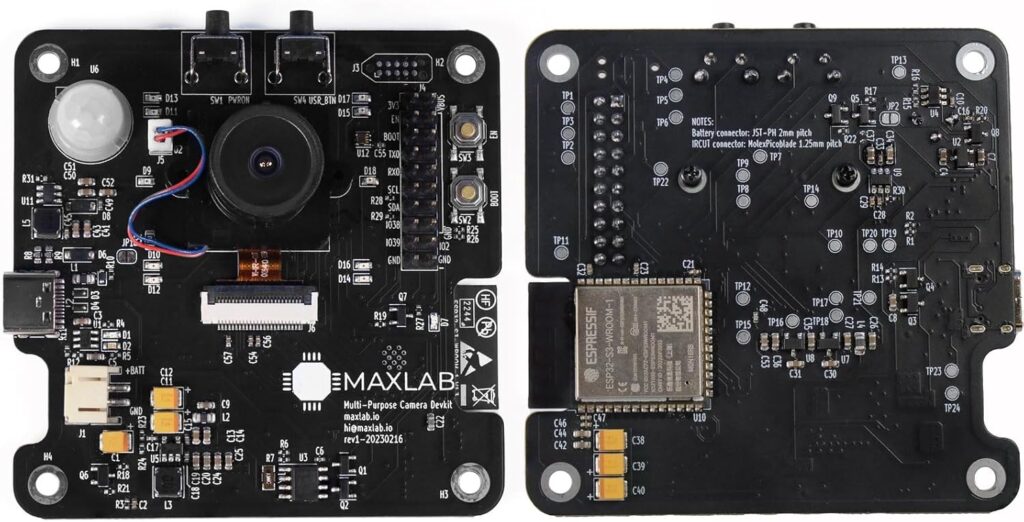
Specifications
| Image Size | 0.3MP/2MP/3MP |
| Image Formats | RGB, JPEG |
| Frame rate | Up to 15 FPS |
| Night vision | Yes |
| Sensors | Light, Proximity, Passive IR |
| Connectivity | WiFi, BLE |
| Memory | 8MB Flash, 512 kB + 8MB RAM |
| Software | TF-Lite Micro, esp-dl |
| Interfaces | SPI, UART |
Purchase the camera
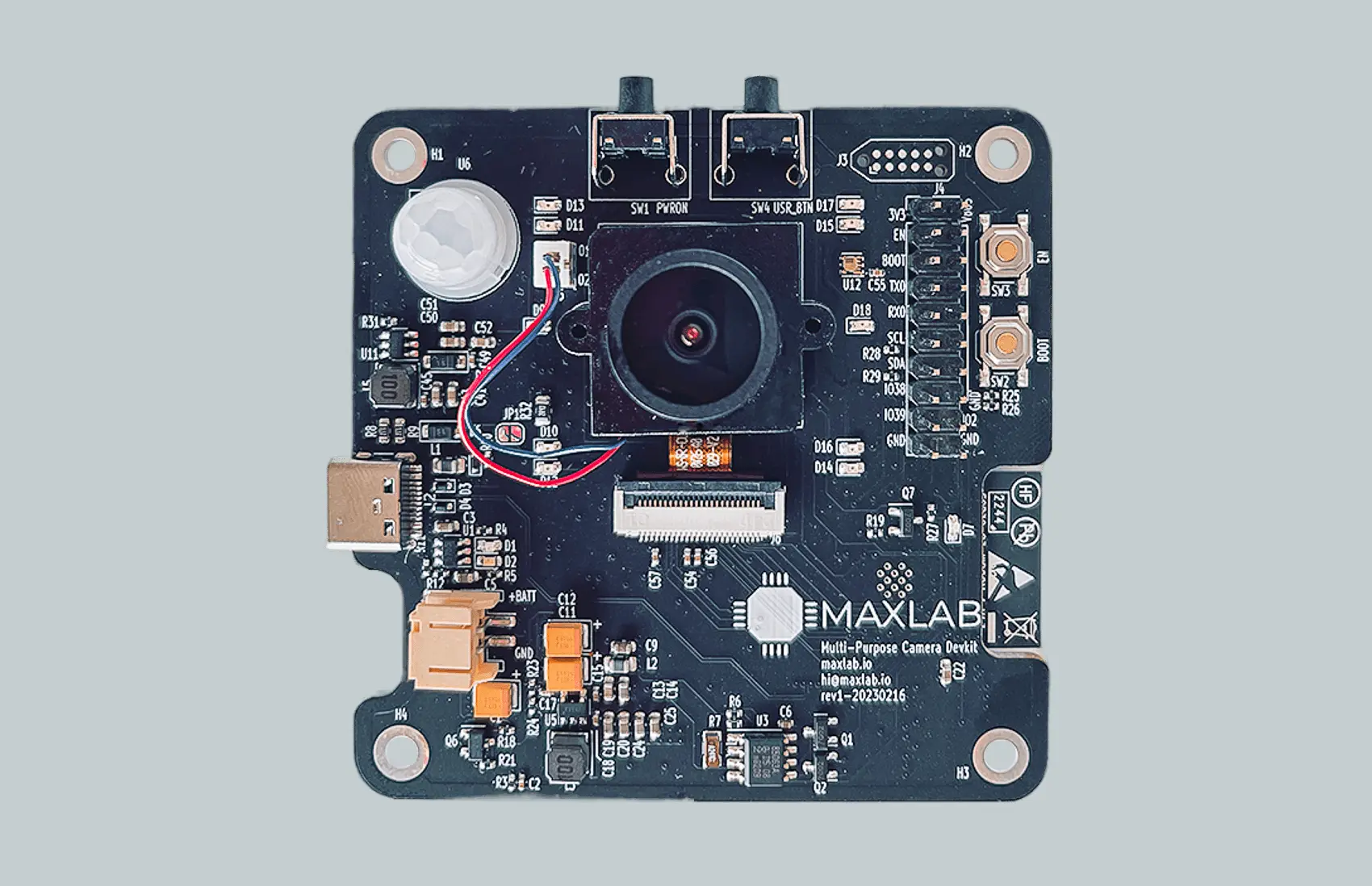
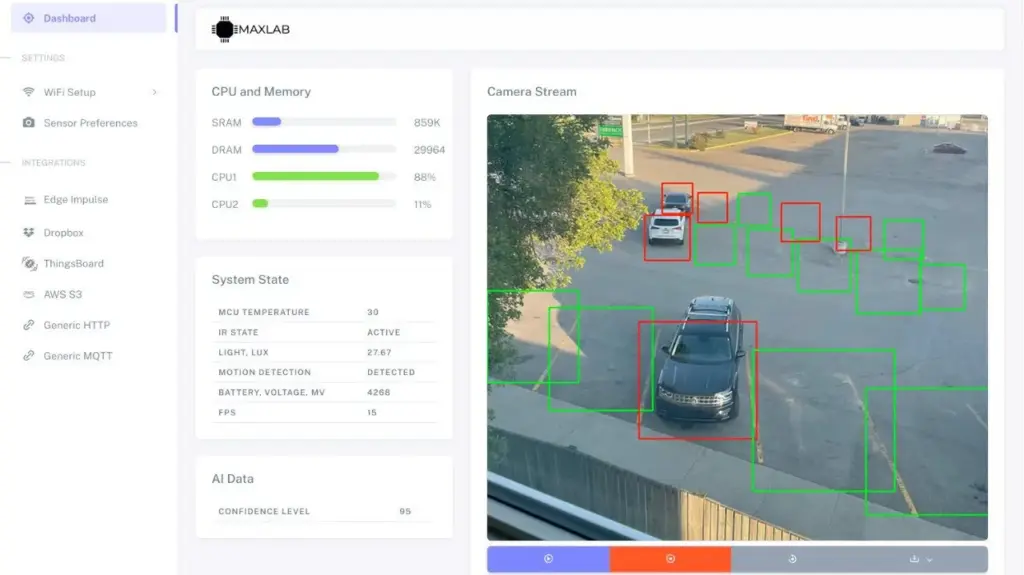
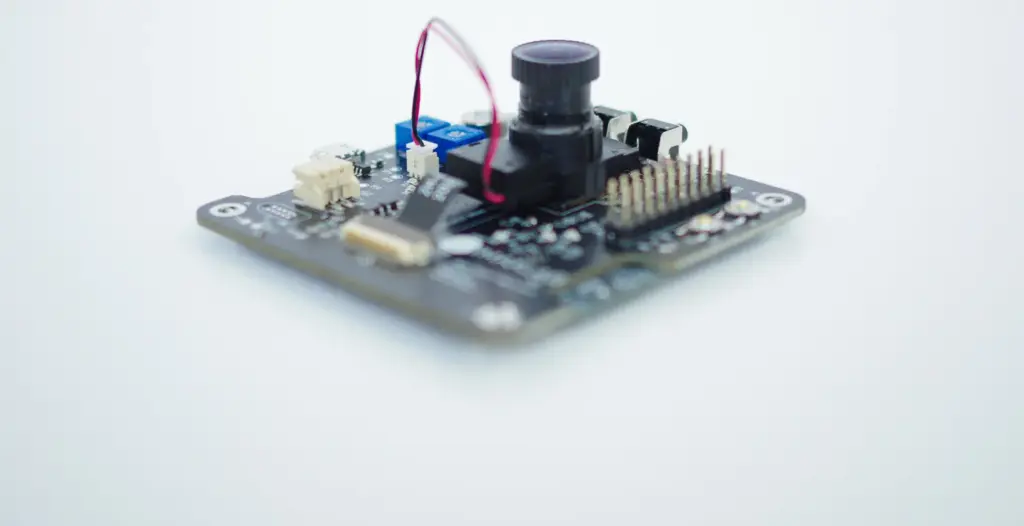
Lightweight esp32 camera with IR module and dashboard.
AI computer vision systems are advanced technologies that enable machines to interpret and analyze visual information, revolutionizing various industries by enhancing automation, decision-making, and user interactions. These systems utilize artificial intelligence, particularly deep learning algorithms, to process vast amounts of image and video data, facilitating applications ranging from autonomous vehicles to healthcare diagnostics (source).
One exciting advancement in this field is the introduction of AI-powered camera modules that open up new possibilities for monitoring and detection tasks. A people counter, gesture detection, or smart condition monitoring are just a few applications of the AI camera module. These capabilities are transforming industries such as retail, security, and manufacturing by providing real-time data and insights to optimize operations (source).
The AI Camera module offers a powerful yet flexible solution for a variety of use cases. Its compact design and advanced features make it suitable for both commercial and consumer-grade products.
Applications of the AI Camera Module
The AI camera module’s versatility makes it ideal for a wide array of use cases across different industries:
- People Counter: In retail or public spaces, the module can be deployed to count people in real-time, helping businesses analyze foot traffic patterns, manage occupancy, and optimize store layouts for better customer experiences (source).
- Gesture Detection: This feature can be leveraged in interactive systems, such as smart displays or kiosks, where hand gestures can control the system without physical contact, enhancing the user experience and enabling touchless interactions.
- Smart Condition Monitoring: In industrial environments, the AI camera module can be used to monitor equipment conditions and detect anomalies, helping prevent breakdowns or accidents through predictive maintenance. It can also track environmental factors like lighting, proximity, and movement for safety or efficiency improvements (source).
The Growing Impact of AI Vision Technologies
The adoption of AI computer vision technologies, including the AI camera module, is continuously expanding. The global market for computer vision was valued at $9.45 billion in 2020 and is projected to grow to $41.11 billion by 2030 (source). This reflects the growing demand for AI-driven solutions in sectors such as manufacturing, retail, security, and beyond. These systems not only improve operational efficiency but also enable automation and data-driven decision-making.
However, as AI computer vision systems continue to advance, their deployment raises critical questions about transparency, accountability, and the mitigation of inherent biases. Concerns surrounding the fairness of algorithmic outcomes, particularly regarding marginalized communities, have spurred advocacy for responsible AI practices and regulatory frameworks (source). The ongoing dialogue among technologists, policymakers, and the public is essential to navigate the complexities of this rapidly evolving field, ensuring that the benefits of AI computer vision are harnessed responsibly and equitably.
AI Camera Module – a story of hardware development
As AI-powered computer vision systems continue to evolve, the integration of specialized hardware such as the AI camera module plays a pivotal role in enabling real-time image processing and intelligent decision-making. Hardware development in this area has become increasingly focused on optimizing both performance and power efficiency, particularly for applications in IoT and edge computing.
The AI camera module, equipped with components like the ESP32 MCU and TF-Lite Micro, allows for on-device processing, reducing latency and minimizing the need for cloud-based data handling. This advancement is critical for industries like retail, healthcare, and manufacturing, where immediate feedback and analysis are essential for operational efficiency. With enhanced sensors and connectivity features like WiFi and BLE, these modules are bridging the gap between raw data collection and actionable insights, making them a cornerstone of modern AI solutions.
The development of hardware systems tailored to computer vision has also seen an emphasis on scalability and adaptability. AI camera modules, designed with compatibility in mind, can easily be integrated into larger ecosystems, leveraging the power of deep learning algorithms for tasks such as facial recognition, object detection, and motion tracking.
This versatility enables developers to customize their solutions for a wide range of use cases, from smart city infrastructure to automated security systems. Furthermore, the robustness of the hardware, coupled with advancements in materials such as UV-resistant plastics and durable sensors, ensures that these devices can withstand harsh environmental conditions, extending their lifespan and maximizing return on investment (ROI) for businesses and consumers alike. As hardware continues to evolve alongside AI, the potential for creating smarter, more connected systems will only increase, pushing the boundaries of what’s possible in AI-driven technologies.
Would you like to know more about cameras and computer vision tech?
What does Edge AI, computer vision, machine vision, and Industry 4.0 mean? If you are wondering how a can business benefit from computer vision, give us a shout and we can see if there are any areas where vision technology applies.