
Work · Roofing and ice-melt equipment
Solar-powered roof camera: 9,500 units shipped in 9 months
A roofing-equipment company needed to see roofs with ice-melt cables through the winter without running power to them. We built a solar camera on our Tokay Lite platform and took it from sketches to the first batch in nine months.
Result
9,500units shipped to the client's customers- Timeline
- 9 monthsfrom concept sketches to the first manufacturing batch
- Saving
- $50k–$125kestimated saving against the alternative priced; varies per project
- Battery
- 6 monthson one charge, measured on the shipped camera
The brief
Ice-melt heat cables keep gutters and roof edges clear, but the owner cannot see from the ground whether the cables are doing their job. The client wanted a camera on the roof that works all winter with no wiring.
Problem
The roofs are on remote properties and vacation homes. Checking them in winter meant a visit or a ladder, and a failed heat cable showed up as an ice dam and a repair bill. There is no mains power on a roof edge, so a wired camera was out.
Constraints
Battery and solar only, so the camera had to sleep almost all day. Outdoors all winter, so the enclosure and electronics had to handle −40 °C. Night pictures were a requirement, because ice forms after dark. And the client wanted the first batch inside a year.
What we built
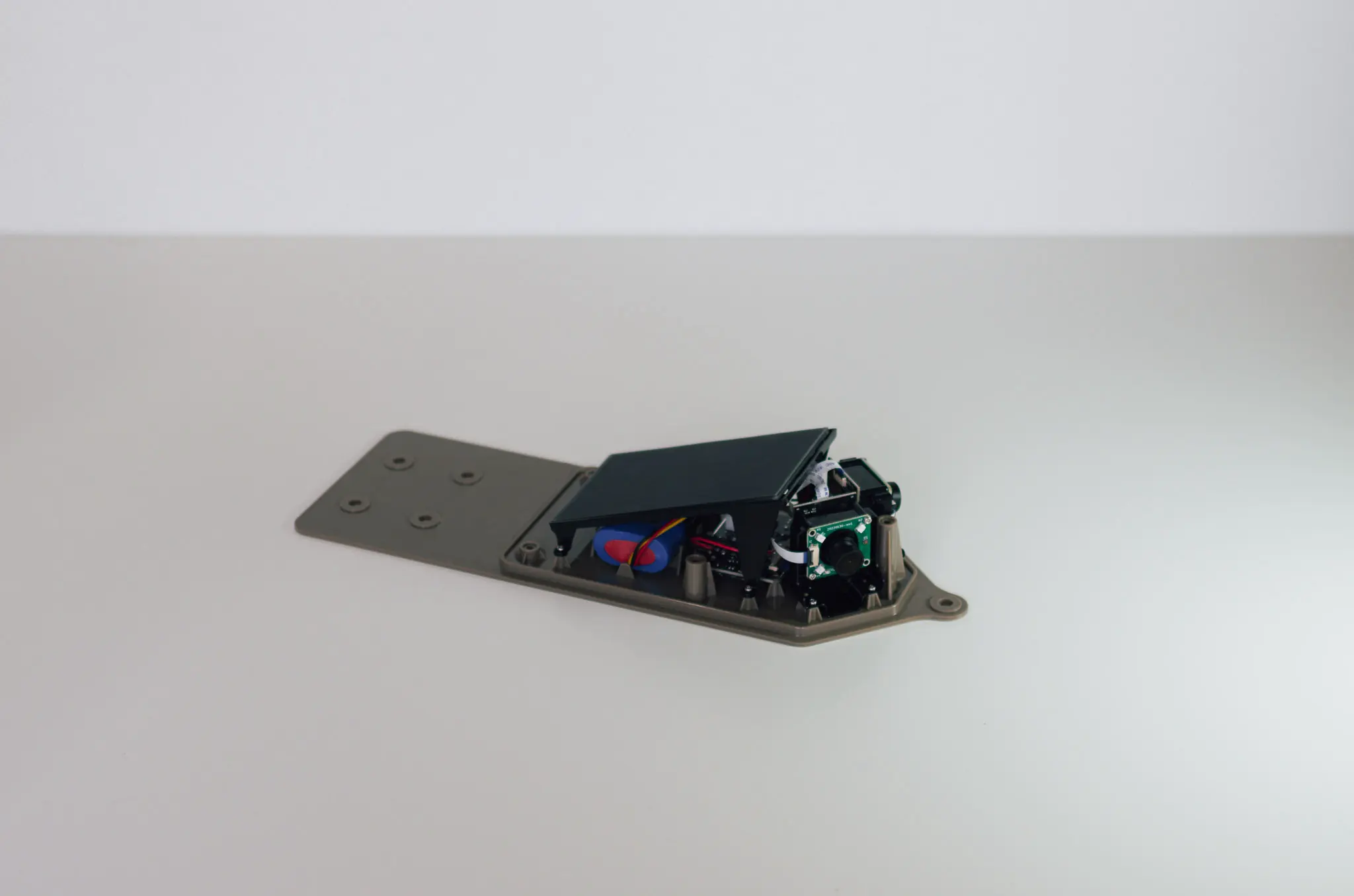
A camera on our Tokay Lite platform: an ESP32-S3 with an OV2640 sensor, a PIR motion sensor, IR LEDs for night images and an external real-time clock that switches the main regulator off in standby. We chose the ESP32 for its availability during the component shortages, so production did not stall on parts. A small solar panel charges the 1-cell LiPo, and photos go over Wi-Fi to the owner's app. The enclosure is UV-resistant Lexan.
Nine months to the first batch
The project started from concept sketches and ended with the first manufacturing batch nine months later. In between came the first prototype, several revisions after tests on real roofs, then certification and design-for-manufacturing work with the factory.
Starting from a board we already had shortened the first stage. The camera electronics were a variant of Tokay Lite, so the early months went into the enclosure, the solar charging and the power budget instead of a new board from zero.
Six months on one charge
The battery lasts because the camera is off almost all the time. The external real-time clock cuts power to the main regulator in standby, so the board draws microamps. The clock timer or the PIR sensor wakes it, the ESP32-S3 takes a photo, runs detection, sends the result over Wi-Fi and goes back to sleep.
The solar panel on the lid charges the LiPo in daylight. Measured on the shipped camera, the battery alone carries it about six months, which covers a northern winter with short days and snow on the panel. The IR LEDs light the roof edge to about 10 m for night images, which come out black and white.
Built for a roof edge
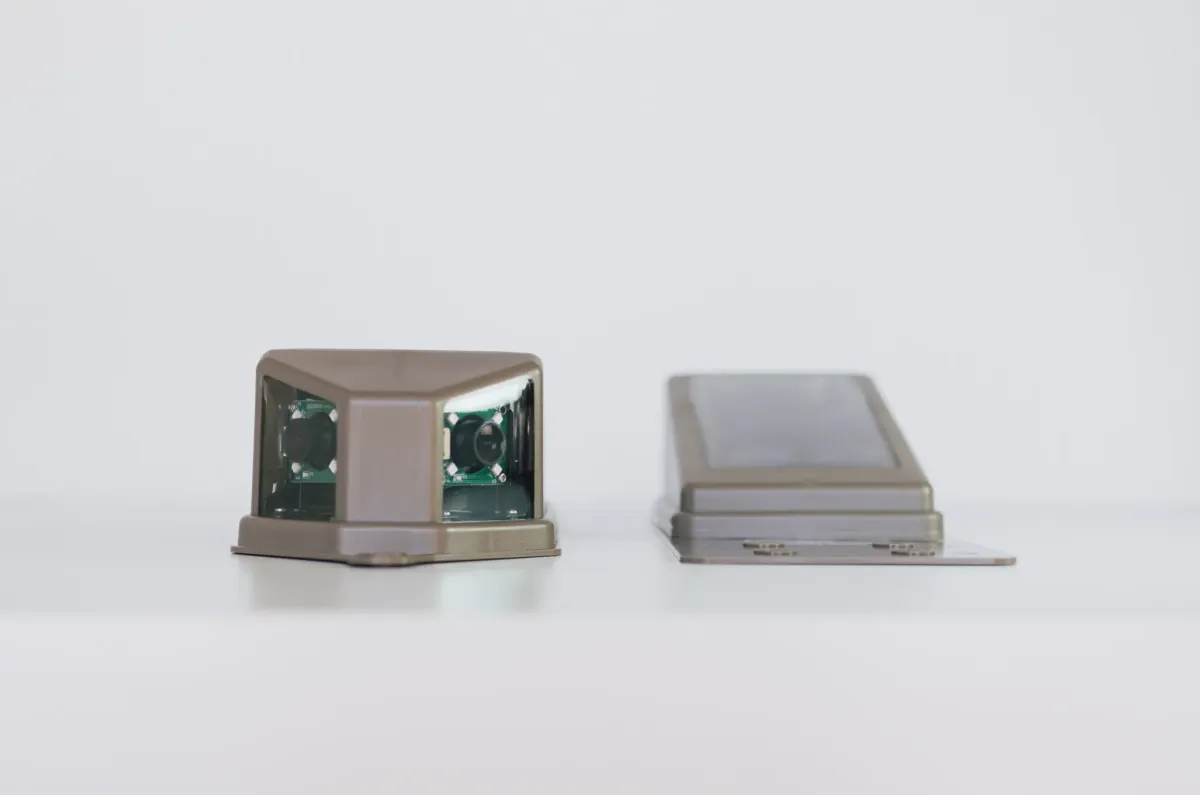
The enclosure is moulded from UV-resistant Lexan, sealed against rain and snow, with the solar panel set into the lid and the IR LEDs around the lens.
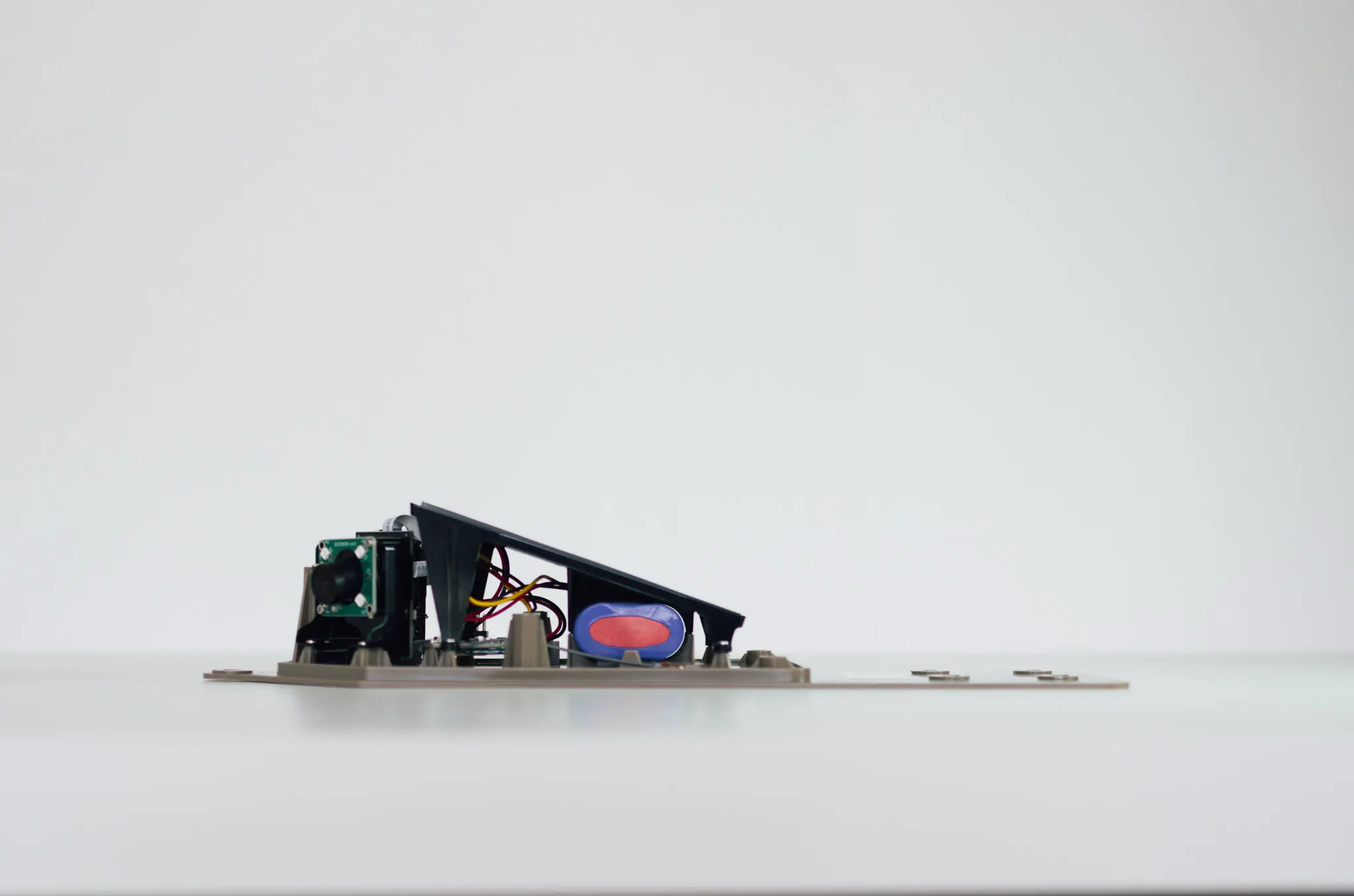
Side view: sealed housing and bracket. 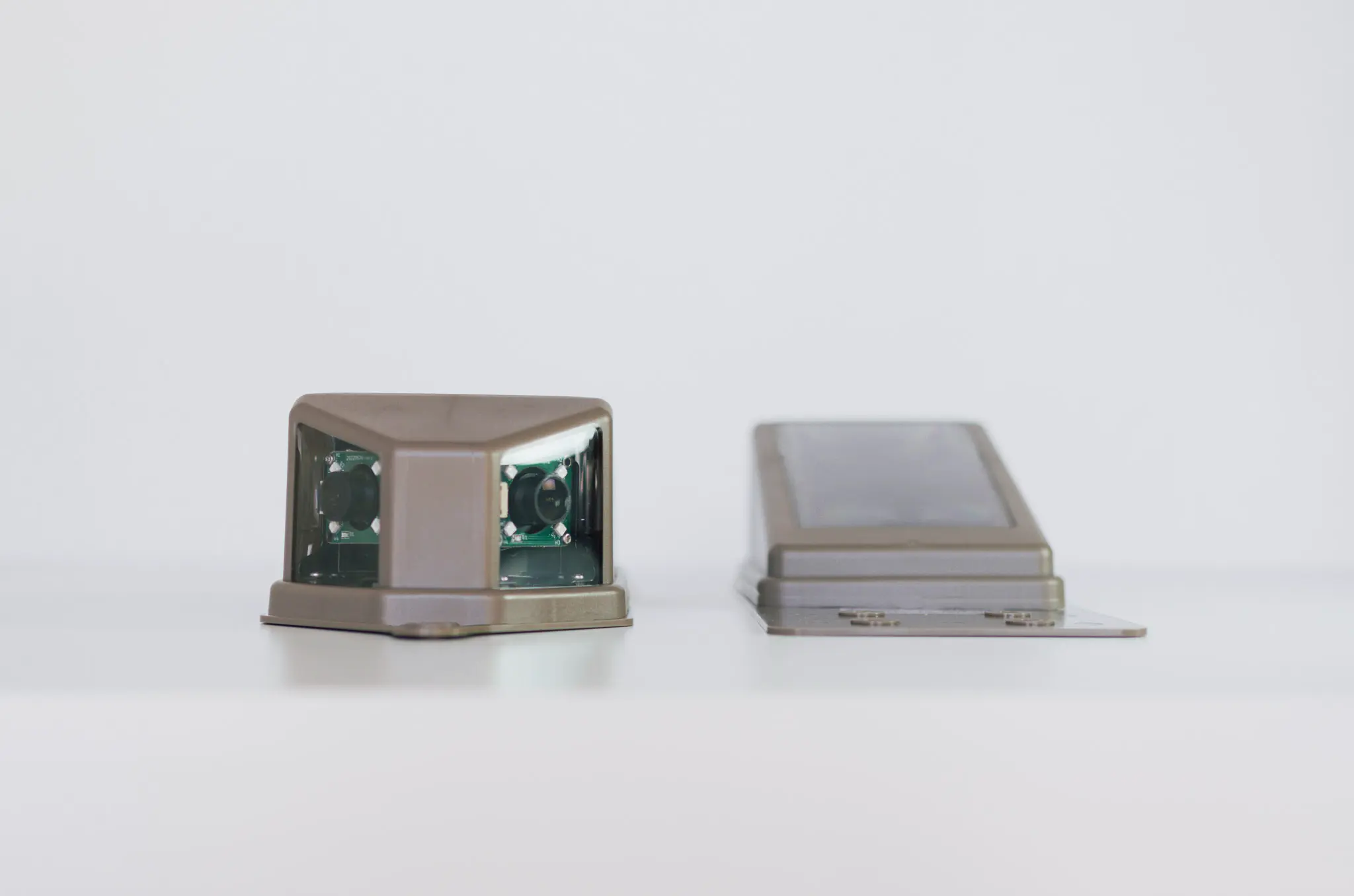
Front: lens and the IR LEDs for night images. 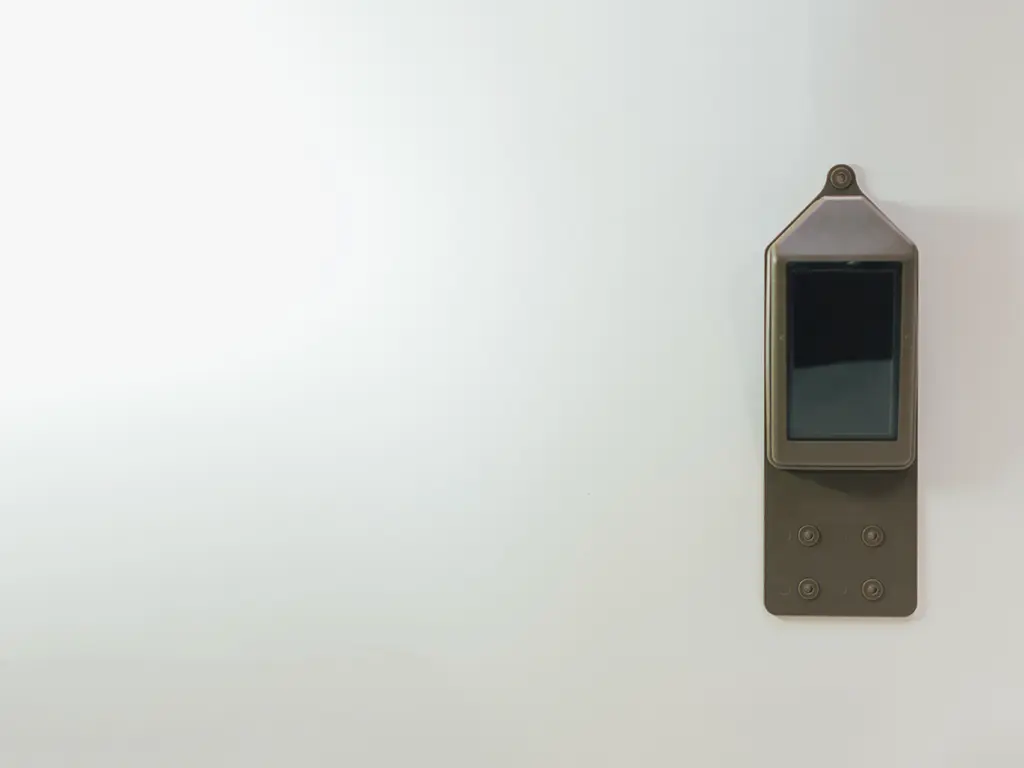
Top: the solar panel that charges the LiPo. 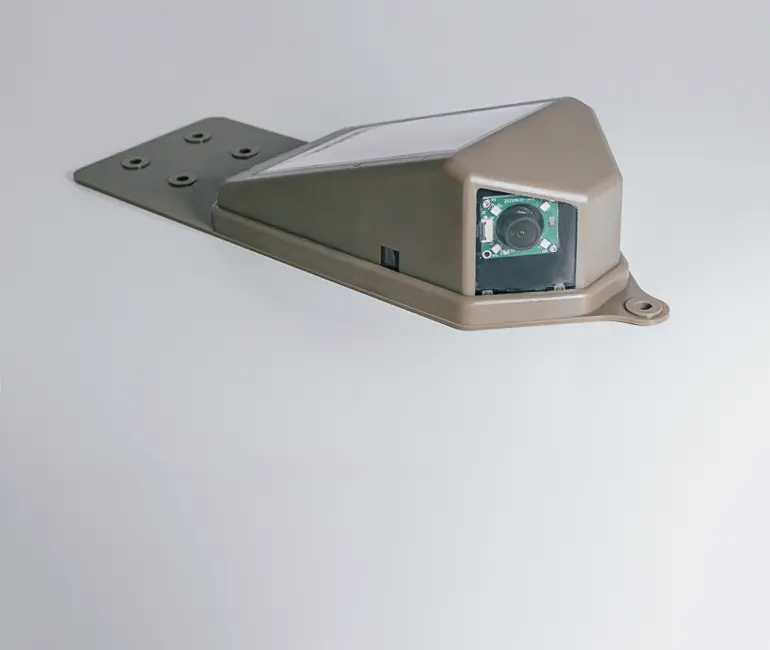
Assembled unit before the enclosure test. 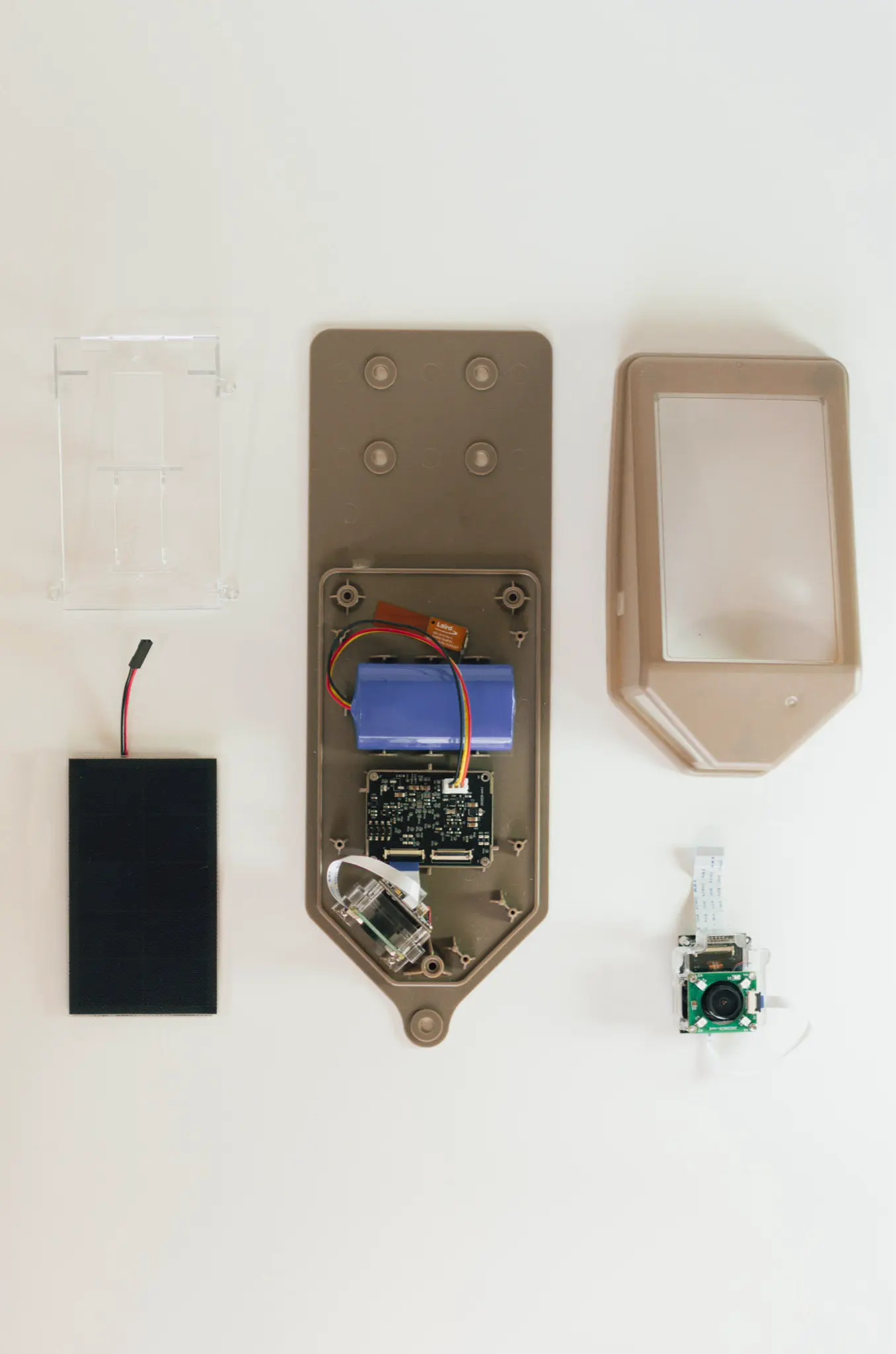
The full enclosure.
What the project used
The camera electronics are a variant of Tokay Lite, our open-source ESP32-S3 camera board. The schematic, layout and SDK are public on GitHub, and single boards are on Mouser, so a client can test the platform before committing to a custom run.
Enclosure design, solar charging, firmware, certification and the handover to the factory were done as a development project. The same path is open for your device: start from a board we have shipped, change the sensor, the housing or the radio, and go to production in months rather than years.
- Platform
- Tokay Lite, ESP32-S3, OV2640 camera
- Enclosure
- Lexan, UV-resistant, sealed for roof mounting
- Power
- 1-cell LiPo plus solar panel, about 6 months on one charge
- Units
- 9,500 shipped
Start your own device
Tell us what the device has to see, where it will sit and how long it has to run on a battery. We reply within 24 hours with the questions we would ask before quoting.
Or email [email protected]. More client devices on the work page.
Common questions
How long did the roof camera take to develop?
Nine months from concept sketches to the first manufacturing batch, including the prototype revisions, field tests on real roofs, certification and the handover to the factory. Starting from our Tokay Lite board shortened the first stage.
How many cameras were made?
About 9,500 units have shipped to the client's customers so far. Two more client devices built on our boards are described on the work page.
Why an ESP32?
Availability. The project ran during the component shortages, and the ESP32 family stayed in stock when many application processors did not, so production did not stall on parts. The ESP32-S3 also has enough compute for on-device detection and sleeps at microamps, which the battery budget needed.
How does it run six months on one battery?
The camera is off almost all day. An external real-time clock switches the main regulator off in standby, so the board draws microamps. The clock timer or the PIR motion sensor wakes it for a few seconds to take a photo, run the model and send the result over Wi-Fi. The solar panel on the lid charges the 1-cell LiPo in daylight; the six-month figure is for the battery alone, measured on the shipped camera.
What did the client save?
Savings from building on Tokay typically run $50k–$125k against the alternative a client has priced; it varies per project. We do not publish the client's cost breakdown.
Can you build a version of this camera for our product?
Yes. The electronics are a variant of Tokay Lite, so a different image sensor, enclosure, radio or firmware is a change to a shipped design rather than a new board. Tell us what it has to see and how long it has to run, and we reply with the questions we would ask before quoting.
Is the roof camera for sale?
No, it is the client's product. The board it is built on, Tokay Lite, is sold as a single unit on Mouser and CrowdSupply, and the design is open source on GitHub.